

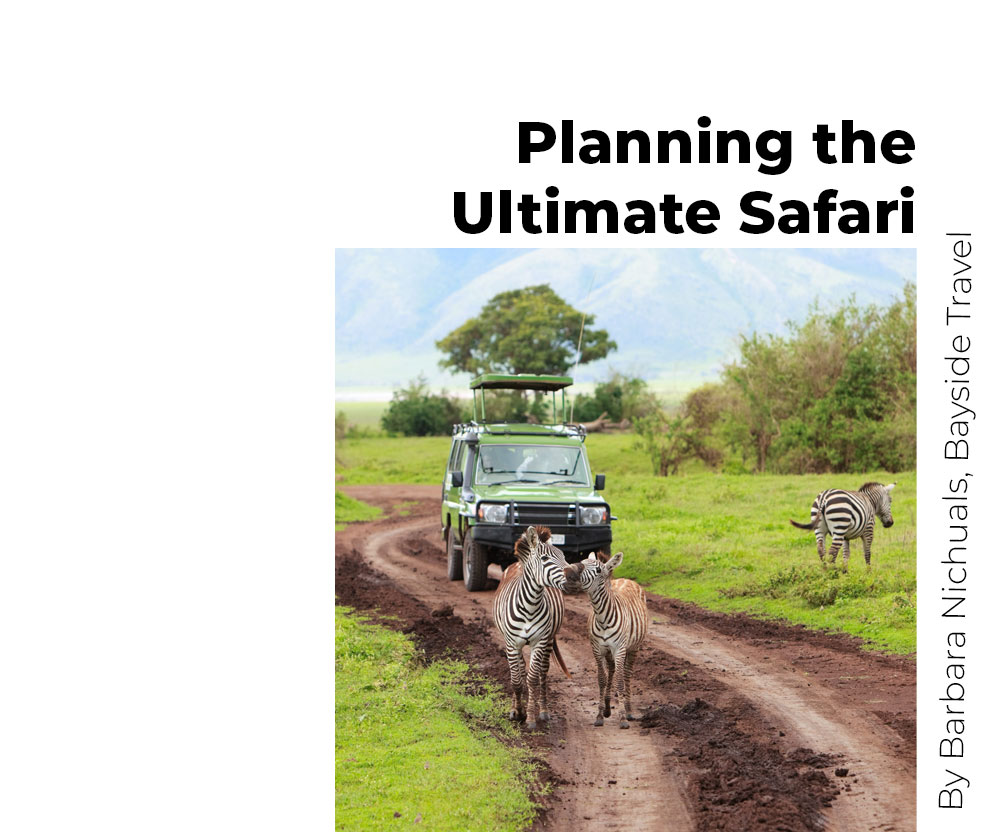
 Embark on a Transformative Safari Adventure: Safaris offer an exhilarating journey into the heart of the natural world, but a successful trip requires thoughtful planning. A trusted travel advisor can help define your goals so you can focus on what matters most while preparing for an unforgettable adventure.
Choose Your Safari Style: Different safaris appeal to different travelers. Traditional game drives in 4×4 vehicles let you safely cover vast areas and view a wide range of wildlife. A walking safari, always accompanied by armed rangers, offers an intimate connection with the bush—South Luangwa National Park in Zambia is renowned for this experience.
For a change of pace, a boat safari lets you glide through waterways to observe hippos, crocodiles, and elephants from a fresh perspective—Botswana’s Okavango Delta is ideal. Horseback safaris offer thrilling rides alongside herds of antelope, often getting closer to wildlife than vehicles can. For a breathtaking aerial view, a hot-air balloon safari floats you over the Serengeti for sunrise panoramas you’ll never forget.
When to Go: The best time for a safari depends on your destination and desired experience. The dry season (June–October) in East and Southern Africa is peak safari time—vegetation is sparse, animals gather at waterholes, and visibility is excellent. The green season (November–May) brings lush landscapes, fewer tourists, and abundant birdlife. Many animals give birth during this time, making it especially rewarding for photographers and wildlife lovers.
If witnessing the Great Migration in Kenya is on your list, timing is everything. The dramatic river crossings usually occur between July and October, but the herds move year-round in search of fresh grazing.
Travel Responsibly: Many safari-goers are drawn by a desire to travel ethically and support conservation. Your choice of operator and lodge can make a real difference to local communities and wildlife. A knowledgeable travel advisor can guide you toward companies that hire local staff, invest in sustainability, and uphold ethical practices.
As a visitor, you play a role too. Maintain a respectful distance from animals—never ask guides to go off-road or disturb wildlife for a photo. Conserve water, minimize waste, and avoid single-use plastics. Several countries, including Kenya, ban plastic bags entirely. Steer clear of unethical activities like petting lion cubs or riding elephants—these often exploit animals rather than protect them.
Where to Stay: Safari accommodations range from rustic to ultra-luxurious, depending on your comfort level, budget, and how close you want to feel to the wilderness. Safari lodges offer hotel-style amenities in permanent structures built from natural materials like stone, wood, and thatch. Tented camps provide a more immersive, “classic safari” ambiance—canvas tents with plush beds and ensuite bathrooms blending modern comfort with nature’s soundtrack.
For the adventurous, basic camping delivers a raw connection to the wild, while unique stays add extra magic. Treehouse lodges offer elevated views, and some luxury camps let you sleep in “star beds,” open to the night sky.
A Journey of a Lifetime: A safari is more than a vacation—it’s a transformative expedition into nature’s most magnificent settings. With expert guidance, you can craft an experience tailored to your passions—tracking big cats, photographing migrating herds, or simply reconnecting with the wild.Ultimately, a well-planned safari leaves more than memories—it fosters understanding, supports conservation, and helps ensure these landscapes endure for generations to come.
To begin your adventure, call Bayside Travel at 914-833-8880 and visit www.luxurytravelservice.com