

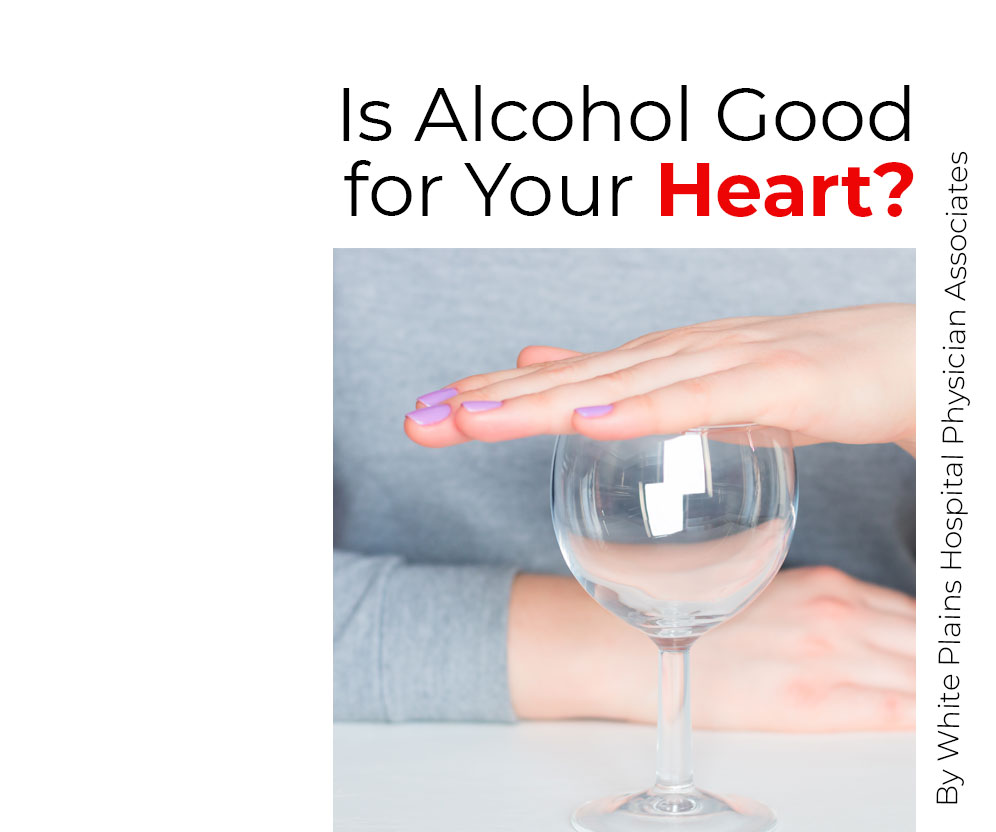
 For years, many people believed that enjoying a nightly glass of red wine was doing their heart a favor. But new research is telling a different story.
“If you’re over 40 and want to do one simple thing for your heart, the single most impactful beverage to cut back on—or completely cut out—is alcohol,” says White Plains Hospital cardiologist Dr. Erden Goljo.
While an occasional drink may still fit into some people’s lifestyle, today’s evidence suggests alcohol offers no proven heart benefits—and even moderate drinking may increase the risk of several cardiovascular conditions.
The Myth of the “Heart-Healthy”
Glass of Wine
For years, studies suggested moderate alcohol consumption might protect the heart. Researchers now believe those findings were likely influenced by other healthy habits common among light drinkers, such as exercising regularly, eating a healthier diet and having better access to healthcare.
“Alcohol itself doesn’t appear to be providing the protection people once thought,” says Dr. Goljo. “When researchers account for those other lifestyle factors, the heart benefit disappears.”
Alcohol and Irregular Heart Rhythms
One of the strongest links between alcohol and heart health is its connection to atrial fibrillation (AFib), the most common heart rhythm disorder. AFib causes the heart to beat irregularly and can increase the risk of stroke, heart failure and other complications.
Research has found that:
• Even one alcoholic drink a day may increase the risk of developing AFib.
• Risk continues to climb as alcohol intake increases.
• People with AFib who reduce or eliminate alcohol have fewer episodes and are more likely to stay in a normal heart rhythm.
“You may have heard of ‘holiday heart syndrome,’ episodes of rapid, irregular heartbeat triggered by a night of heavy drinking,” says Dr. Goljo. “But the risk isn’t limited to binge drinking. Regular, moderate alcohol consumption quietly remodels the heart’s upper chambers over time, making them larger and more prone to developing an abnormal rhythm.”
Research has also shown that even light-to-moderate drinking may increase blood pressure over time, another major risk factor for heart disease and stroke.
Alcohol Can Weaken the Heart Muscle
Long-term alcohol use can also damage the heart muscle itself, leading to a condition called alcoholic cardiomyopathy. In this condition, the heart becomes enlarged and weaker, making it harder to pump blood effectively.
While this has traditionally been associated with years of heavy drinking, newer research suggests heart function may begin to change with much lower levels of alcohol than previously believed. Some people may also be genetically more susceptible to alcohol-related heart damage.
“The good news is that if it’s caught early and you stop drinking, the heart can often recover its pumping strength,” says Dr. Goljo.
Should You Stop Drinking?
“Not everyone needs to eliminate alcohol completely, but many people could benefit from drinking less,” explains Dr. Goljo.
Talk with your healthcare provider about your alcohol intake, especially if you have:
• A history of atrial fibrillation or other heart rhythm problems
• High blood pressure
• Heart failure or a weakened heart muscle
• A family history of heart disease
“If you currently drink, reducing your intake is one of the most evidence-backed steps you can take for heart health,” says Dr. Goljo. “The goal isn’t perfection. It’s about making informed decisions based on the best evidence we have today.”
Dr. Erden Goljo is a cardiac electrophysiologist with White Plains Hospital Physician Associates who specializes in the diagnosis and treatment of heart rhythm disorders. To schedule an appointment, call (914) 849-2690.