

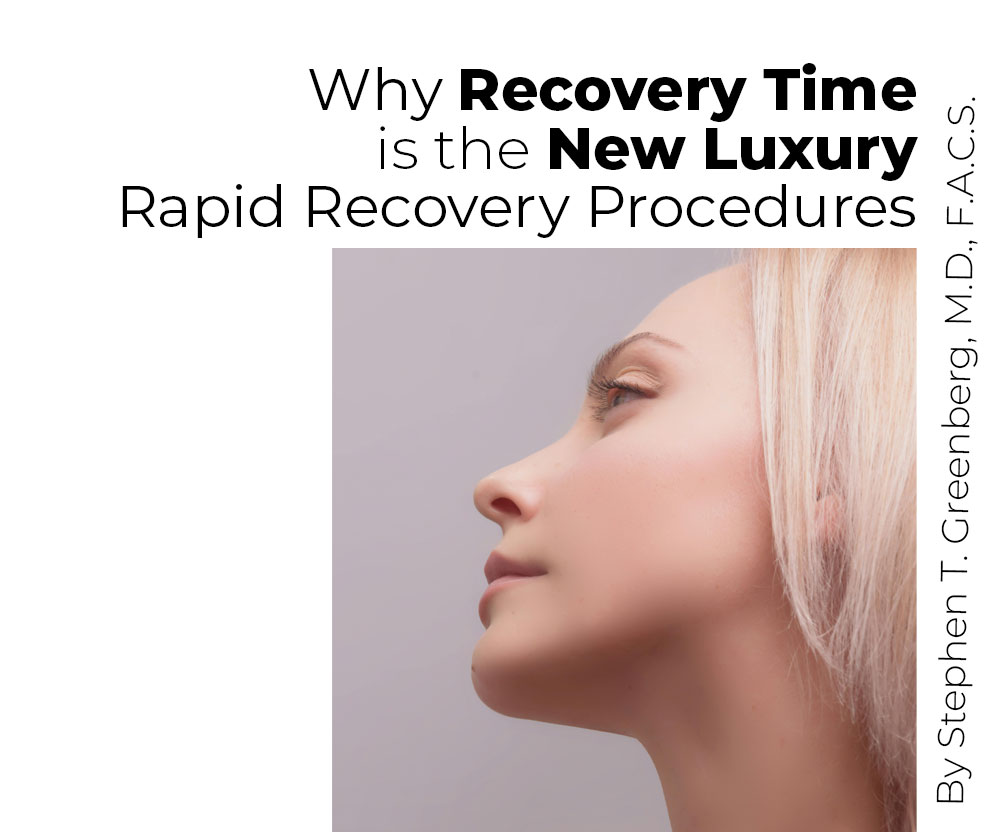
 Patients are no longer planning their lives around surgery. They’re asking how surgery can fit into their lives. In my practice, that shift shows up most clearly in conversations around facelifts, breast procedures and body contouring. Exceptional results are of course the focus, but recovery has become just as relevant.
As a double board-certified plastic surgeon, I’ve spent years refining not just the outcome of surgery, but the experience around it. I have had the privilege to work with a wide range of patients, including high-profile clients, and the concern about downtime is consistent. Patients want to look and feel better, but they don’t want to take a lot of time off from their lives to do it.
What Actually Causes Downtime
Most people associate surgery with pain, swelling and time away from normal activity. What they are really experiencing is tissue trauma.
During surgery, the body responds to disruption. Removing excess skin, creating space for the breast implants, handling tissue, and controlling bleeding all contribute to inflammation. That inflammation is what leads to swelling, discomfort and limited movement after a procedure. The more controlled the surgery is, the less trauma the body experiences. And the less trauma there is, the easier recovery becomes.
Technique Changes the Experience
My Rapid Recovery techniques are built around minimizing that disruption. I use a mini-incision approach along with precise implant placement to reduce unnecessary trauma to the surrounding tissue.
This is not about doing less. It is about doing things more carefully. Controlled dissection, careful handling of tissue and accurate placement all play a role. When those elements are managed properly, there is less bleeding, inflammation and less stress on the body overall. That difference is what changes the patient’s experience after surgery.
What 24-Hour Recovery Really Means
When patients hear “24-hour recovery,” there is often confusion around what that actually looks like.
It does not mean there is no healing process, as the body is still recovering. What it means is that most patients are able to return to normal daily activity much sooner than expected. They are moving more comfortably, experiencing less restriction and not feeling removed from their routines. Most of my patients are up, walking and resuming light daily activity within a day. That shift alone changes how surgery fits into their lives.
Less Trauma Matters
When tissue is handled carefully during surgery, the body has less to react to, which directly affects how a patient feels in the hours and days that follow. Swelling and bruising are reduced, and movement tends to come back more easily, not because recovery is eliminated, but because the body is not working against excess disruption. That early response carries through the entire healing process, allowing recovery to move in a more steady and predictable way while patients begin to feel like themselves again sooner.
A Shift in How Patients Think About Surgery
Mini facelifts, breast augmentation and liposuction are no longer viewed as something that requires stepping away from daily life, but something that can work within it. Patients are balancing careers, families, and full schedules, and they want to move through the process without feeling removed from all of it.
Recovery is no longer an afterthought. It is part of the decision.
The goal is not just to achieve a beautiful result. It is to do it in a way that allows patients to stay present in their lives while they get there.
If you are considering a cosmetic procedure, understanding both the result and the recovery is essential. Call 844-486-0005 or visit GreenbergCosmeticSurgery.com to schedule a consultation and learn what a rapid recovery plan can look like for you.